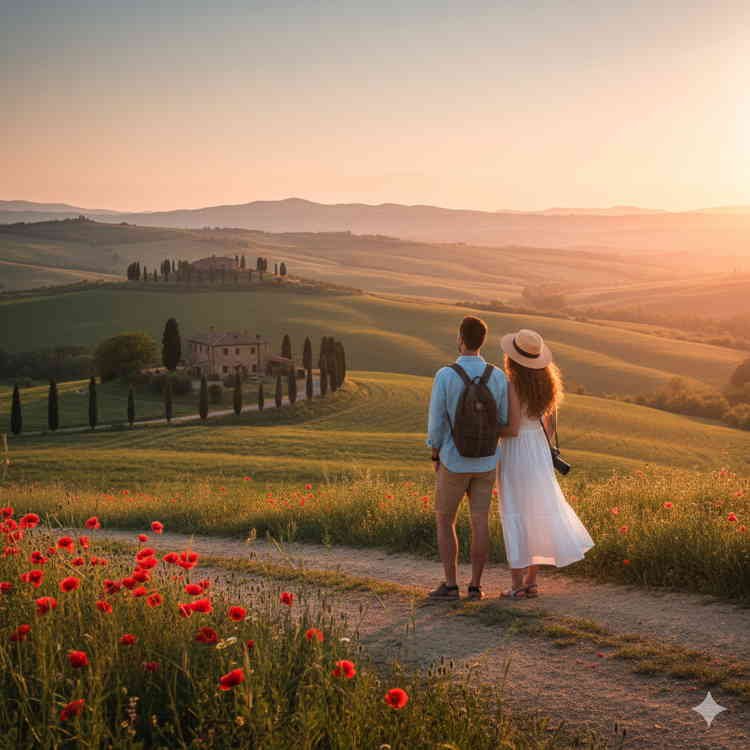
Tuscany beckons travelers with its rolling hills, Renaissance art, and world-renowned cuisine. Whether you’re planning to sip Chianti in a medieval village or explore Florence’s artistic treasures, knowing a few key Italian phrases can transform your journey from tourist to welcomed guest. While many Italians in tourist areas speak English, making the effort to communicate in their language shows respect and often opens doors to authentic experiences you might otherwise miss.
Why Learning Basic Italian Matters
The Tuscan people take pride in their language and culture. When you greet a shopkeeper with a warm “Buongiorno” or thank your server with a heartfelt “Grazie,” you’re not just exchanging words—you’re building bridges. Locals appreciate the effort, even if your pronunciation isn’t perfect, and they’ll often respond with extra warmth, patience, and insider recommendations that guidebooks can’t provide.
Ten Essential Phrases for Your Tuscan Adventure
1. Buongiorno / Buonasera (Good morning / Good evening)
These greetings are fundamental to Italian etiquette. Use “Buongiorno” (bwon-JOR-no) until around 4 PM, then switch to “Buonasera” (bwon-ah-SEH-rah). Always greet people when entering shops, restaurants, or any establishment—it’s considered rude not to acknowledge others with a proper greeting.
2. Per favore (Please)
“Per favore” (pehr fah-VOH-reh) is your magic word in Italy. Add it to any request to show politeness. Whether you’re asking for directions or ordering food, this phrase demonstrates that you understand Italian social customs and respect local norms.
3. Grazie mille (Thank you very much)
While “Grazie” (GRAHT-see-eh) means thank you, “Grazie mille” (GRAHT-see-eh MEE-leh) literally translates to “a thousand thanks” and expresses deeper gratitude. Tuscans use this frequently, and it’s perfect when someone goes out of their way to help you.
4. Scusi (Excuse me)
“Scusi” (SKOO-zee) is incredibly versatile. Use it to get someone’s attention politely, apologize for bumping into someone, or when you need to squeeze past people in crowded markets. It’s the formal version, appropriate for strangers and situations requiring respect.
5. Parla inglese? (Do you speak English?)
Before launching into a complex question, ask “Parla inglese?” (PAR-lah een-GLEH-zeh). This shows you’ve tried to speak Italian first and need assistance. Many Italians will appreciate your effort and happily switch to English if they can.

6. Quanto costa? (How much does it cost?)
Essential for markets and small shops, “Quanto costa?” (KWAN-toh KOH-stah) helps you navigate purchases. In traditional markets, especially in smaller Tuscan towns, not everything has price tags, making this phrase indispensable for budget-conscious travelers.
7. Il conto, per favore (The check, please)
In Italy, servers won’t rush you out by bringing an unsolicited bill. When you’re ready to leave, ask “Il conto, per favore” (eel KON-toh, pehr fah-VOH-reh). This phrase signals you’ve finished your meal and are ready to settle up at your own pace.
8. Dov’è il bagno? (Where is the bathroom?)
“Dov’è il bagno?” (doh-VEH eel BAHN-yoh) is a practical must-know. Bathrooms in Italy are sometimes tucked away in unexpected places, and this phrase will quickly direct you where you need to go without awkward pantomiming.
9. Non capisco (I don’t understand)
When the conversation moves too quickly, “Non capisco” (non kah-PEES-koh) politely indicates you need the speaker to slow down or repeat themselves. Most Italians will happily adjust their pace or find alternative ways to communicate with you.
10. Delizioso! (Delicious!)
After enjoying a memorable Tuscan meal, compliment the chef or server with “Delizioso!” (deh-leet-see-OH-zoh). This enthusiastic praise for the food will earn you genuine smiles and sometimes even recommendations for what to try next.
Beyond the Basics
While these ten phrases cover essential situations, consider downloading a translation app as backup and learning a few food-related terms. Knowing words like “vino” (wine), “acqua” (water), and “pane” (bread) enhances your dining experiences throughout Tuscany’s trattorias and osterias.
Cultural Tips for Language Success
Remember that Italians value personal connection. Make eye contact when speaking, don’t rush your words, and smile genuinely. If you mispronounce something, laugh it off—Tuscans appreciate humor and will often help you improve your pronunciation with encouragement rather than criticism.
Practice your phrases before arriving, perhaps with language learning apps or Italian language videos. The more comfortable you become with basic pronunciation, the more confident you’ll feel using these phrases in real situations.
Your Tuscan adventure will be richer when you engage with locals in their native language. These ten essential phrases provide the foundation for meaningful interactions, helping you discover the authentic Tuscany that exists beyond tourist brochures—one conversation, one “grazie,” and one “delizioso” at a time.
If you found this article useful, don’t forget to share it with the world and to like our Facebook Page!
Credits:
Image by Gemini



 The Best Italian Podcasts for Beginners: Boost Your Listening Skills Overnight