Walking into an Italian bar (which, confusingly for English speakers, just means “coffee shop”) and confidently ordering your coffee is one of the small but genuinely satisfying milestones of learning Italian. Get it right, and the barista treats you like a local. Get it wrong, and, well — you might just get an amused smile and a cappuccino at 4pm, which almost no self-respecting Italian would ever order.
Let’s fix that.
Espresso: Just Say “Un Caffè”
Here’s the first thing that trips people up: if you walk into a bar in Italy and order “an espresso,” you’ll be understood, but you’ll also sound like a tourist. In Italy, a regular small, strong coffee is simply called un caffè. Espresso is the default — there’s no need to specify it.
“Un caffè, per favore.” That’s it. That’s the whole order.
The Essential Coffee Vocabulary
- Caffè — a regular espresso
- Caffè macchiato — espresso “stained” with a small dash of milk
- Caffè lungo — a slightly more diluted espresso, made with more water
- Caffè ristretto — a shorter, more concentrated espresso
- Caffè corretto — espresso “corrected” with a splash of liquor (usually grappa)
- Caffè d’orzo — a caffeine-free “coffee” made from roasted barley
- Cappuccino — espresso with steamed milk and foam
- Caffè latte — espresso with a larger amount of warm milk (careful: ordering just “a latte” in Italy might get you a glass of plain milk!)
- Latte macchiato — warm milk “stained” with a bit of espresso, milk-forward
- Marocchino — espresso, milk foam, and cocoa powder, served in a small glass
The Unwritten Rule Everyone Warns You About
You’ve probably already heard this one: Italians generally don’t drink cappuccino after 11am, and definitely not after a meal. The reasoning is largely digestive — milk-based drinks are considered too heavy to have after eating, especially after lunch or dinner. A caffè (plain espresso), on the other hand, is perfectly acceptable at any hour, including right after a big meal, since it’s believed to aid digestion.
This isn’t a rigid law (I don’t follow it, for example), and no one will refuse to serve you — but don’t be surprised if a barista raises an eyebrow, and know that ordering an espresso instead will make you blend right in.

How Italians Actually Drink Their Coffee
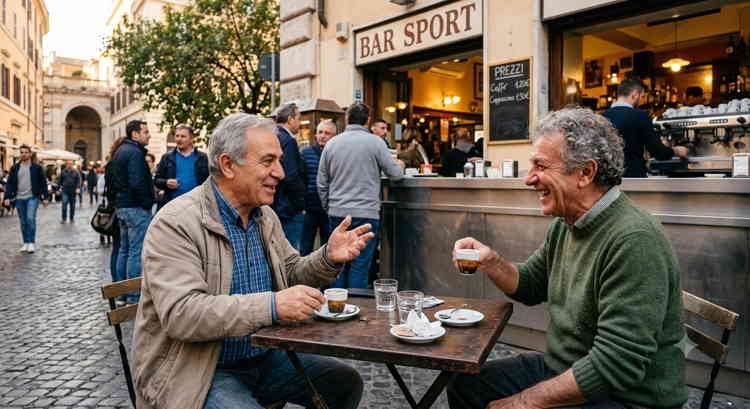
Coffee in Italy is less about lingering with a laptop and more about a quick, ritualistic pause in the day. Most Italians drink their espresso standing at the bar counter (al banco), often in under two minutes, chatting briefly with the barista before heading back out. Sitting down at a table (al tavolo) in big cities might cost more — sometimes significantly more — because you’re paying for the seat and the service, not just the coffee.
Useful Phrases at the Bar
- Un caffè al banco, per favore. — An espresso at the counter, please.
- Quant’è? — How much is it?
- Può portarmi lo zucchero, per favore? — Could you bring me the sugar, please? (if it’s not already on the counter).
- Posso avere un bicchiere d’acqua? — Can I have a glass of water? (Often served alongside espresso, and always free.)
Why Coffee Culture Is Worth Learning About
Ordering coffee well is a small thing, but it’s a genuinely useful entry point into Italian daily life and social rhythm — it teaches you about timing, formality, and the small rituals that structure an Italian day.
If you’re planning a trip to Italy, or you just want to sound a little more like a local next time you’re at an Italian café here at home, this kind of practical, everyday vocabulary is exactly what we practice in lessons for beginners — real scenarios, real phrases, so you’re ready the moment you need them.
If you found this article interesting, don’t forget to share it with the world and to like our Facebook Page!
Credits:
Image by Gemini


 Regional Dialects in Italy: Is “Standard Italian” Even a Real Thing?