Why Food Matters in Italian Culture
Few things ignite more passion in Italy than food. Politics? Maybe. Football? Definitely. But food—food is sacred. If you want to connect with Italians, sooner or later you’ll find yourself in a conversation about pizza toppings, pasta shapes, or how to cook the perfect carbonara. And here’s the tricky part: one wrong word, and you may step into a culinary minefield.
Understanding Italian food culture isn’t just about knowing recipes. It’s about appreciating regional traditions, family heritage, and social etiquette. If you want to sound authentic (and avoid awkward moments), learning how to talk about food in Italian is essential.
Food Is Identity, Not Just Flavor
For Italians, food is more than nourishment—it’s tied to family, history, and regional pride. Criticizing someone’s lasagna or risotto is never just about taste; it can feel like criticizing their grandmother or hometown.
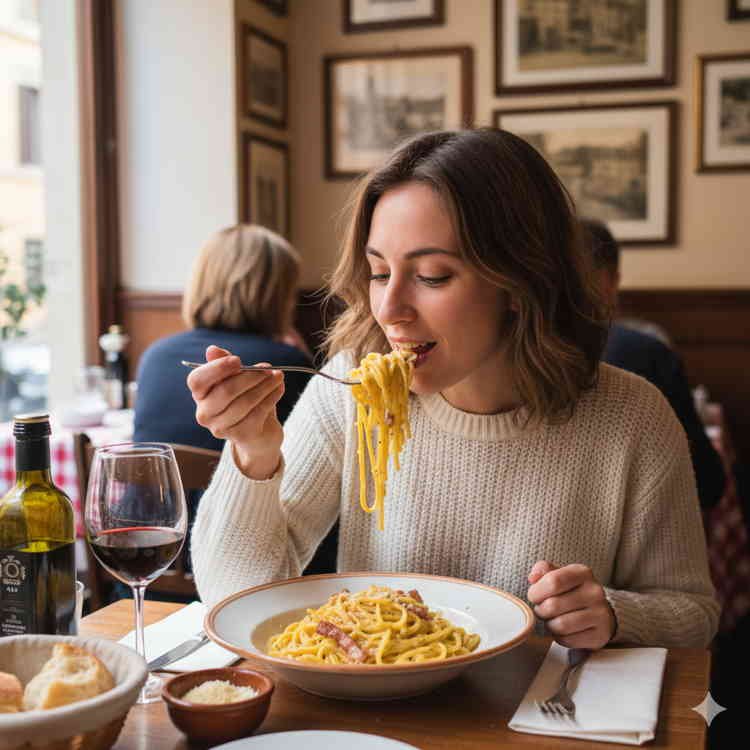
Take carbonara, for instance. The classic Roman recipe calls for pasta, guanciale (cured pork cheek), pecorino romano, eggs, and black pepper. Add cream, garlic, or onions, and you’ve just sparked a debate that could last all night.
This is why Italian food etiquette isn’t only about manners at the table—it’s also about the language you use when discussing dishes.
The Golden Rule: Respect Regional Differences
Italy is a patchwork of culinary traditions. What’s “authentic” in Naples may be unheard of in Bologna. So here’s the number-one rule: never generalize.
Instead of saying, “This is how Italians cook pasta,” try:
- A Roma, la carbonara di solito si prepara così… (In Rome, people usually prepare carbonara this way…)
- Nella mia regione, la lasagna si fa con la besciamella, ma so che in altre regioni usano la ricotta. (In my region, lasagna is made with béchamel, but I know others use ricotta)
This small adjustment shows respect and curiosity, which Italians deeply appreciate.
Useful Italian Expressions for Food Conversations
Adding a few Italian phrases to your vocabulary can help you navigate food discussions without stepping on anyone’s toes. Here are some diplomatic expressions:
- Dipende dalla regione. → “It depends on the region.”
- Ci sono tante varianti. → “There are many variations.”
- È una questione di tradizione. → “It’s a matter of tradition.”
- A me piace così, ma capisco che non sia per tutti. → “I like it this way, but I understand it’s not for everyone.”
Using these expressions makes you sound respectful and knowledgeable about Italian dining customs.
Common Food Mistakes Tourists Make
Many misunderstandings around Italian food culture come from tourist habits. Here are a few classic mistakes to avoid:
- Ordering a cappuccino after lunch
Italians generally see milk-based drinks as breakfast fare (I’m an exception). So, after noon, stick to espresso. - Asking for pineapple on pizza
In Italy, pizza con l’ananas is considered a foreign invention, not part of tradition.Ask for pizza with mele and gorgonzola or pere and gorgonzola, instead. That’s acceptable. - Breaking pasta before cooking
Long pasta shapes like spaghetti should be cooked whole—cutting them is culinary sacrilege. - Mixing fish with cheese
Sprinkling parmesan on seafood pasta? For most Italians, that’s a no-go.
Avoiding these faux pas shows you understand not just food, but Italian food etiquette.
How to Disagree Politely About Food
Food debates in Italy can get lively. Here’s how to disagree without offending:
- Ask questions instead of making statements
Say: “Come si fa di solito la pizza qui?” (How do you usually make pizza here?) instead of “Questa non è vera pizza” (This isn’t real pizza). - Use humor
A playful line like “Se aggiungo la panna alla carbonara, mi arrestano?” (If I add cream to carbonara, will I get arrested?) can lighten the mood. - Show willingness to learn
“Nel mio Paese la facciamo diversamente, ma mi piacerebbe provare la versione italiana” (In my country we do it differently, but I’d love to try the Italian way).
These strategies make conversations about food fun rather than confrontational.
Why These Conversations Matter
Learning how to talk about food in Italian isn’t just about avoiding embarrassment. It’s about forming real connections. Italians take pride in their culinary traditions, and showing sensitivity to that pride is a sign of cultural respect.
When you sprinkle in authentic Italian phrases, you don’t just sound like a tourist ordering dinner—you sound like someone who values Italian food culture at its core.
Final Tips for Italian Food Conversations
- Listen more than you speak. Italians love to share knowledge.
- Avoid absolutes. Skip “This is the best” or “That is wrong.”
- Be gentle. Remember: food is emotional.
- Show enthusiasm. Passion is always welcome at the table.
Conclusion
From carbonara controversies to debates about pizza toppings, food conversations in Italy are lively, passionate, and deeply cultural. But with the right vocabulary, an understanding of Italian dining customs, and a touch of humility, you can join in without offending anyone.
So next time you’re in a Roman trattoria or a Sicilian family dinner, don’t shy away from the discussion. Smile, listen, sprinkle in a few Italian phrases, and raise your fork with respect. Because in Italy, talking about food is almost as important as eating it.
If you found this article useful, don’t forget to share it with the world and to like our Facebook Page!
Credits:
Image by Gemini



 Journey Through Disappearing Italy: 10 Traditional Italian Crafts Surviving Modernity