Italy’s coffee culture isn’t just about caffeine—it’s a deeply ingrained social ritual that reflects centuries of tradition, regional pride, and an almost philosophical approach to daily life. While tourists often view Italian coffee rules as quirky restrictions, these unwritten laws reveal fundamental truths about Italian values, health beliefs, and the art of living well. Understanding the real meaning behind these customs transforms them from arbitrary guidelines into windows into the Italian soul.
The Cappuccino Cutoff: More Than Morning Snobbery
If you’ve been reading my blog for a while, you already know how I feel about this topic—but I can’t resist bringing it up again. The most infamous Italian coffee rule—never order a cappuccino after 11 AM—continues to confuse (and sometimes annoy) visitors who love a creamy coffee at any hour. But here’s the thing: this isn’t just Italian coffee snobbery. The rule comes from long-standing beliefs about digestion and meal timing, traditions that have been passed down for generations.
Italians consider cappuccino a breakfast drink because milk is viewed as filling and heavy on the stomach. Drinking it after a meal, especially lunch or dinner, is thought to interfere with digestion. In Italian food culture, meals follow a carefully orchestrated sequence designed to aid the digestive process. A cappuccino after eating would be like serving dessert before the appetizer—it disrupts the natural order.
When an Italian orders “un caffè” (a coffee), they mean espresso. This linguistic choice itself reveals priorities: coffee in its purest, most concentrated form is the default, not an option among many. After midday, espresso becomes the socially acceptable choice because it’s light, quickly consumed, and believed to aid rather than hinder digestion.
The Speed of Consumption: Coffee as Punctuation
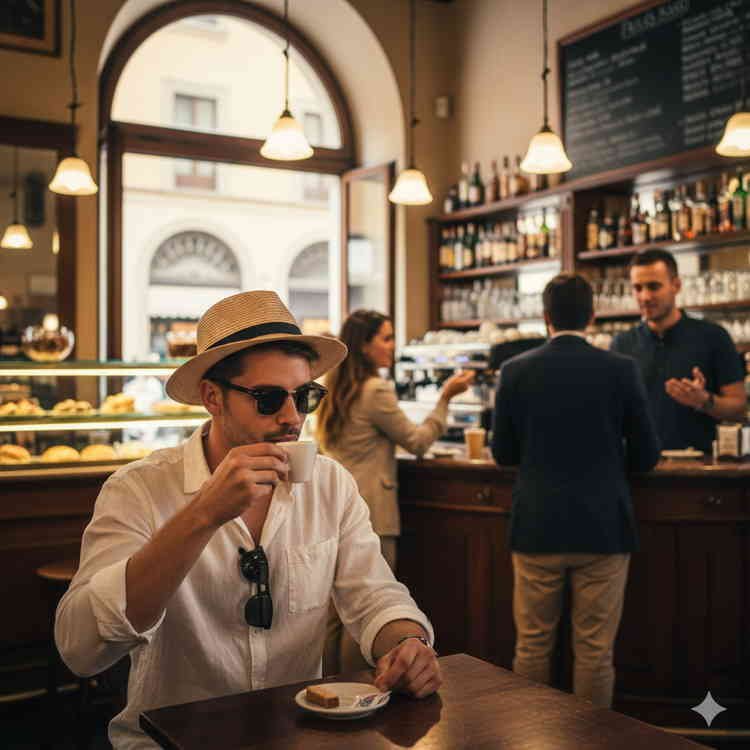
Walk into any Italian bar during morning rush hour, and you’ll witness a ballet of efficiency. Italians approach the counter, order their espresso, drink it in two or three quick sips while still standing, pay, and leave—often within five minutes. This isn’t rudeness or lack of appreciation; it’s purpose.
For Italians, espresso serves as punctuation in the day’s rhythm. It’s a brief pause, an energizing comma between activities. The standing tradition at the bar counter reinforces this concept—sitting down signals leisure time and typically costs more. “Prendere un caffè” (to take a coffee) literally means to grab or take, not to linger over.
This speed also connects to freshness. Espresso is meant to be consumed immediately after preparation, when the crema is still intact and the temperature perfect. Letting it sit would be like allowing a soufflé to deflate—a waste of the barista’s craft.
The Macchiato Middle Ground: Balance in Everything
The macchiato—espresso “stained” with a small amount of milk foam—represents the Italian philosophy of balance. “Macchiato” means stained or spotted, and ordering “un caffè macchiato” (a stained coffee) gives you espresso’s strength with just a hint of milk’s smoothness.
This drink embodies the Italian principle of “la via di mezzo” (the middle way)—not too much, not too little. It’s acceptable throughout the day because the minimal milk doesn’t significantly impact digestion, yet it offers variety from straight espresso. The macchiato exists as evidence that Italian coffee rules aren’t rigid dogma but thoughtful guidelines with room for personal preference within boundaries.

The Sugar Ritual: Sweetness Is Personal
While Italians have strong opinions about milk timing, sugar in espresso remains a personal choice without judgment. Many Italians add sugar to their espresso, stirring vigorously before drinking. This ritual serves a purpose beyond sweetening—it helps integrate the sugar fully and slightly cools the drink to drinking temperature faster.
The freedom around sugar reveals an important truth: Italian coffee rules aren’t about conformity but about respecting coffee’s nature and your body’s needs. Sugar doesn’t interfere with digestion or alter the fundamental experience of espresso, so it falls within acceptable personalization.
The Social Architecture: Coffee as Community
Behind all these rules lies a deeper meaning—coffee as social glue. The bar isn’t just where you buy drinks; it’s the neighborhood’s living room. Baristas know regulars’ orders, names, and family situations. Ordering coffee the “right” way signals you understand the unspoken social contract of this communal space.
Following these customs shows respect not just for coffee but for the community gathered around it. When you order espresso after lunch instead of cappuccino, you’re demonstrating cultural literacy and respect for shared traditions. You become part of the ritual rather than an observer of it.
The Underlying Philosophy: Quality Over Quantity
Ultimately, Italian coffee rules reflect a broader life philosophy prioritizing quality over quantity. Italians would rather have one perfect espresso than a bucket-sized mediocre coffee. They’d rather spend five focused minutes at the bar than thirty distracted minutes with a to-go cup.
These rules aren’t about making coffee complicated—they’re about making it meaningful. Every guideline serves the purpose of maximizing enjoyment, respecting tradition, and maintaining the social fabric that coffee supports. Understanding this transforms following Italian coffee customs from obligation into appreciation.
When you order your next espresso at an Italian bar, remember you’re not just following rules—you’re participating in a cultural practice that values community, and the perfect pause in a well-lived day.
If you found this article useful, don’t forget to share it with the world and to like our Facebook Page!
Credits:
Image by Gemini



 Italian Small Talk Secrets: What to Say (and Never Say) to Italians